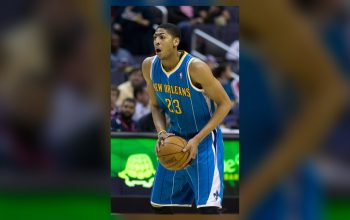

The NBA’s 2026 draft cycle is still a long way from the podium, but the latest first-round mock draft is already offering an early look at how the league’s next talent class is being evaluated. SportsGrid recently broke down USA Today’s projection of all 30 opening-round picks, a reminder that draft planning never really stops for front offices trying to balance current contention with future roster building.
For teams near the top of the projection, the mock is less about certainty than about identifying the kinds of players expected to define the class: high-end shot creators, versatile wings, and big men who can alter the shape of a roster. For teams picking later in the round, the exercise underscores a familiar NBA truth — value often comes from fit, development, and the ability to identify one player who can outperform his slot over time.
What the 2026 mock draft tells us about the NBA landscape
Mock drafts this early are not forecasts in the strictest sense. They are snapshots of how evaluators, scouts, and draft analysts see the talent pool at a given moment. But even a projection built more than a year before draft night can reveal broader league trends. Teams continue to place premium value on players who can do multiple things on the floor, and the draft remains one of the few tools for acquiring impact talent without trading established rotation pieces or committing major cap resources.
The fact that a full first-round mock is already drawing attention speaks to the NBA’s appetite for long-range team building. Some franchises will enter the 2026 draft with clear organizational priorities, while others will use the final months of the season and the pre-draft process to refine how they view the top of the board. The draft order itself can still change dramatically, but the early list gives teams and fans a sense of which prospects are separating from the pack.
Why early first-round projections matter for front offices
For front offices, a mock draft published this early is not simply content for public consumption. It can also reflect the first stage of internal evaluation, when teams start comparing lottery-level players against potential needs several years down the line. Even clubs that expect to contend will follow these projections closely, because the NBA’s current roster model depends heavily on a steady pipeline of young talent.
That is especially true for teams that have already committed significant money to veteran cores. A well-timed draft pick can soften salary-cap pressure, provide lineup flexibility, and eventually emerge as a trade chip if the player develops faster than expected. The 2026 class will not be judged on mock placement alone, but the earliest projections often set the public narrative around who might become the next foundational piece.
SportsGrid’s coverage of USA Today’s mock is part of a broader pattern across the league: analysts are increasingly treating draft cycles as year-round business. That is not because anything is settled now, but because the information environment around prospects develops continuously through high school, college, and international competition. Every new season gives evaluators more data, and every strong or weak performance can alter how the next wave is viewed.
The kinds of players the NBA keeps rewarding
Although the source summary did not spell out every individual selection, the larger context of recent NBA drafts makes the league’s priorities clear. Teams continue to prize length, defensive versatility, and perimeter skill. Wings who can defend multiple positions and create offense have become especially valuable, and big men who can protect the rim without limiting pace remain in demand.
That trend matters because mock drafts are rarely just about who is most talented. They also reflect what the league has learned to value. In recent years, organizations have leaned harder toward players who can survive in playoff settings, where spacing, switchability, and decision-making can matter as much as raw scoring. A prospect who can fit into several different lineups often rises in these projections even before his game is fully formed.
The draft has also become more global in scope, with clubs continuing to monitor college programs, international leagues, and development pipelines across the world. A first-round projection can therefore include a wider range of backgrounds and playing styles than in past eras, which makes the evaluation process richer but also more complicated. Teams are not simply comparing statistics; they are projecting how a player’s game will translate to NBA pace, spacing, and physicality.
What this means for teams and fans right now
For fans, an early mock draft is often the first chance to start thinking about the future in concrete terms. It gives underperforming teams hope that the right pick could accelerate a rebuild, and it gives stable organizations a way to imagine how the next supporting piece might fit. But at this stage, the more important takeaway is not the exact order. It is the scale of the evaluation process that sits behind it.
For teams already invested in their current cores, mock draft season can also serve as a useful reminder that no roster is ever finished. Injuries, trades, aging curves, and salary constraints all push franchises to keep one eye on the future. An early first-round mock does not solve those problems, but it helps outline the talent pool that could eventually shape them.
That is what makes the SportsGrid breakdown of USA Today’s 2026 projection relevant even this far out. It is less a prediction than a map of the conversation to come. The names at the top may change, the order will almost certainly shift, and some prospects will rise while others fall. Still, the exercise captures the NBA’s constant cycle of renewal: even before the current season is fully in the books, teams are already positioning themselves for the next one.
How the draft conversation is likely to evolve
Over the next year, the 2026 class will be reshaped by college seasons, international competition, workouts, medical evaluations, and the scrutiny that comes with being viewed as a possible first-round selection. Some prospects will confirm the early buzz; others will force analysts to reconsider where they belong. That is the nature of draft projection, especially when the sample size is still limited.
What will not change is the importance of the process. The NBA draft remains one of the league’s most consequential annual events because it can alter a franchise’s direction for years. A strong hit in the first round can produce a starter, a star, or a future asset. A miss can force years of recovery. That is why even a mock draft published this early attracts attention: it is the first public outline of the decisions that may define the league’s next competitive cycle.
For now, the 2026 draft remains a distant checkpoint. But the latest first-round projection gives teams, scouts, and fans an early view of the players expected to matter most when the league eventually reaches that stage.