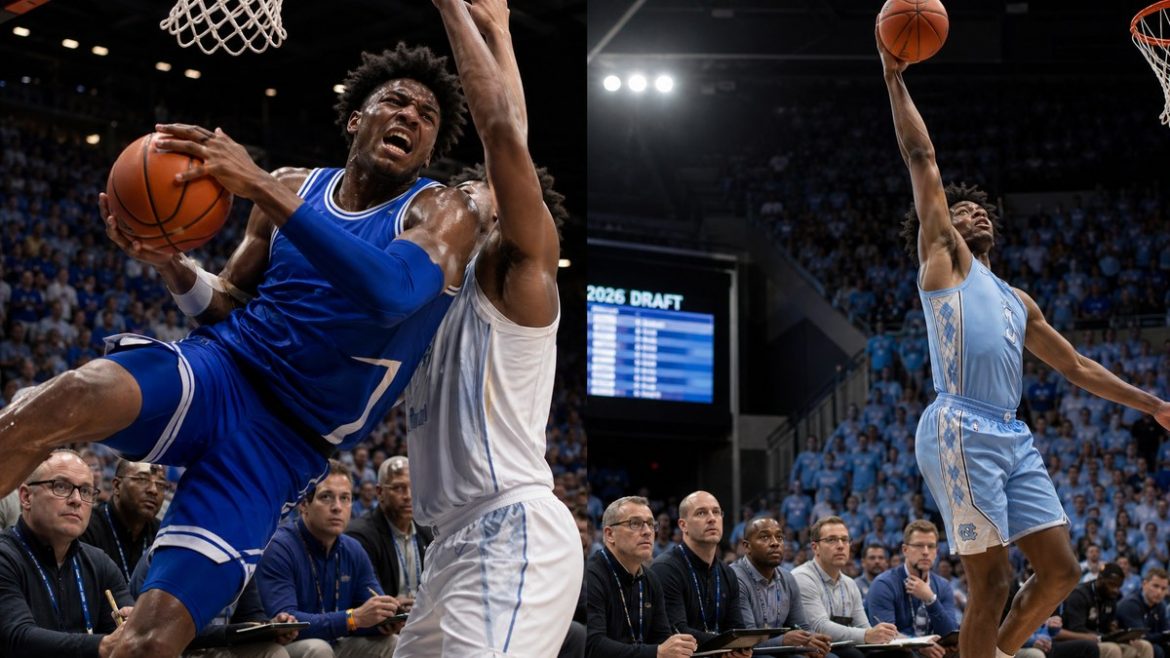
The 2026 NBA Draft is still a year away, but the early conversation is already centered on a familiar kind of prospect search: elite shot-makers on the perimeter, versatile frontcourt players and a group of big men whose value could rise as the season unfolds. According to a New York Times report on confidential feedback from coaches and scouts, Cam Boozer, Caleb Wilson and several top interior prospects are among the names drawing the most attention at this stage. That matters because the first major draft conversations usually begin long before the college season, when teams start building their scouting boards and comparing ceiling, floor and fit.
Cam Boozer remains a central name in the 2026 class
Cam Boozer is already one of the players shaping the early draft picture, and that is not surprising given the level of buzz that has followed him through the amateur ranks. The New York Times report describes him as a focal point of conversations among evaluators, a sign that teams view him as more than just another highly regarded high school prospect. In the draft process, being discussed this far in advance usually reflects a blend of production, projected versatility and long-term NBA translation.
What makes a prospect like Boozer significant at this point is not a single performance but the broader profile. Scouts tend to look for players who can score without needing the offense built entirely around them, defend multiple actions and handle the physical demands that come with the pro game. Early attention does not guarantee a particular draft slot, but it does indicate that Boozer has already entered the class of players teams are tracking closely as a potential franchise-level piece.
Caleb Wilson is part of the same early elite tier
Caleb Wilson is another player mentioned prominently in the report, and his presence in the discussion underscores how wide the pool of high-end talent appears to be in the 2026 class. When scouts talk about the top of a draft cycle this early, they are often trying to determine which players can separate themselves over time with skill growth, decision-making and consistent competitiveness. Wilson’s inclusion in those conversations suggests that evaluators see real upside and enough polish to keep him near the top of the board.
For teams, the challenge with early draft assessments is balancing projection against present ability. At this stage, Wilson is not being measured solely by highlight plays or rankings. He is being evaluated against the things NBA front offices care about most: how he impacts winning, how adaptable his game appears to different offensive systems and whether his physical tools can translate against stronger, faster competition.
Why the top big prospects matter in this draft cycle
The New York Times report also points to the strength of the top big-man prospects, and that part of the class could end up being just as important as the headlining perimeter names. Big men remain difficult to evaluate because their value can change quickly depending on whether they can defend in space, pass on the move and score efficiently without clogging an offense. In recent drafts, teams have increasingly prioritized centers and forwards who can do more than finish around the rim. They need mobility, touch and enough versatility to stay on the floor in playoff settings.
That is why early reports about a strong big-man group are notable. Even before the college season begins, scouts are trying to identify which frontcourt players can become lineup-shifting defenders or offensive hubs. A promising big can dramatically alter the feel of a draft class, especially if several teams near the top are seeking size that can hold up in today’s space-heavy NBA. The report suggests there is enough quality at that position to make the 2026 draft especially interesting once the season gives evaluators more evidence.
How early draft reporting shapes the season ahead
Confidential preseason draft reporting rarely settles anything; instead, it sets the baseline for how the coming months will be covered. By June of 2026, the board could look very different. Players who start slowly can climb with strong conference play, and others who enter the year with major buzz can be overtaken if their skill level does not advance as expected. That volatility is part of what makes early draft coverage meaningful without being definitive.
For college programs and NBA scouts alike, the coming season becomes a long evaluation window. Every game will matter for prospects like Boozer and Wilson, not because one performance will define them, but because consistency is what separates high-level projections from actual top-of-the-board standing. Coaches will watch for improvement in shot creation, defensive awareness, physical maturity and how each player responds when opponents game-plan specifically to slow them down.
What teams will be watching most closely
The report reflects the same priorities that guide nearly every modern draft room. Teams want players who can survive different styles, not just dominate in one. They want to know whether a wing prospect can defend without being hidden, whether a big can stay out of foul trouble and whether a scorer can create offense when possessions break down. Those questions become even more important when the class appears to have multiple players with legitimate top-end potential.
In practical terms, the 2026 draft is starting with depth as well as star power. That gives teams more options, but it also makes the evaluation process tougher. A prospect who looks like a surefire lottery talent in November may face stiffer competition by March from a teammate, opponent or under-the-radar riser who simply keeps improving. The early reports on Boozer, Wilson and the top bigs do not lock in a hierarchy. What they do is establish the opening frame for a draft cycle that already appears to have substance.
That is the value of a report like this one from The New York Times: it offers a first serious look at how NBA talent evaluators are thinking before the broader public debate really begins. The names at the top are important now, but the next 12 months will determine which players actually hold their place.