
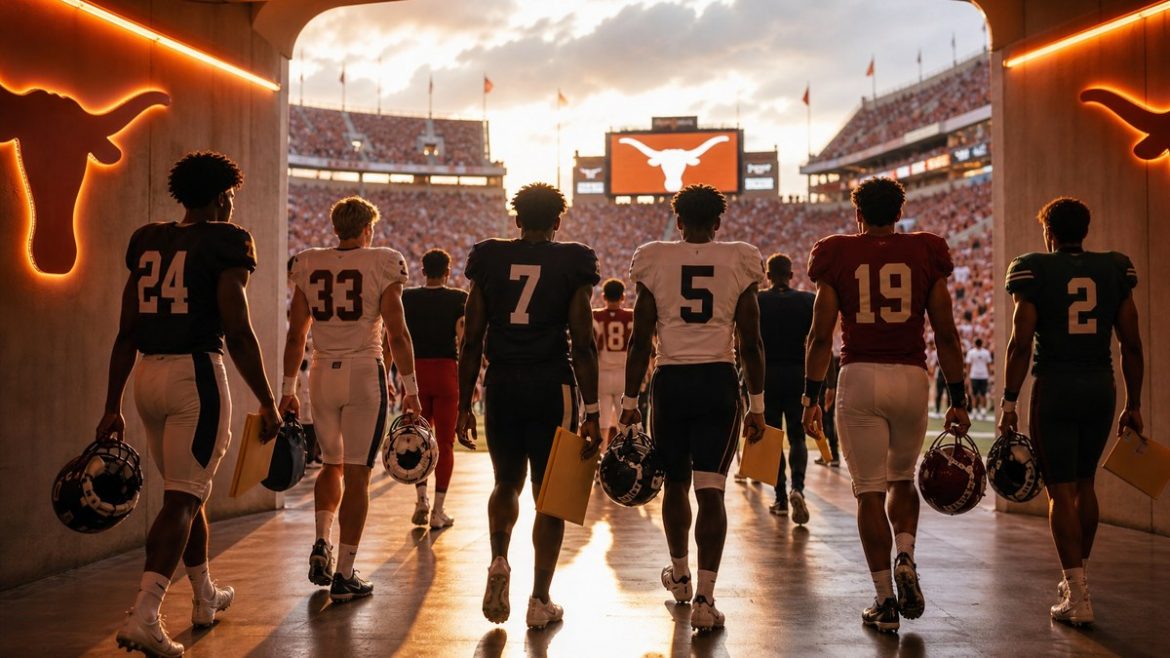
Texas football has landed in the top 10 of the recruiting rankings, a notable checkpoint for a program that has spent the last several cycles trying to translate on-field success into elite roster retention and talent acquisition. The update, highlighted by Burnt Orange Nation and republished through Yahoo Sports, reflects the Longhorns’ continued effort to stockpile high-end prospects as they try to stay among the sport’s annual contenders.
In college football, recruiting rankings are only a snapshot, but they remain one of the clearest indicators of where a program stands in the long-term talent race. For Texas, finishing inside the top 10 is less about one isolated class than it is about sustaining a standard that matches the expectations that come with the brand, the resources, and the recent performance on the field.
Texas recruiting rise shows continued roster-building momentum
Texas has been trying to make top-tier recruiting a baseline rather than an occasional surge. That matters because the modern college football landscape rewards programs that can continuously replenish their roster with players who can contribute early, grow into multi-year starters, and withstand the attrition that comes with the transfer era and early NFL departures.
The Longhorns’ placement in the top 10 suggests that the program is still winning enough battles nationally to remain in the conversation for the best prospects in the country. It also indicates that the staff’s message continues to resonate with recruits who are weighing development, exposure, and the chance to play in a high-profile environment.
For Texas, the recruiting ranking is part validation and part expectation. The school has one of the largest fan bases in the sport and has long been judged against the upper tier of college football powers. A top-10 class does not guarantee anything on Saturdays, but it does help build the kind of depth that typically separates playoff-caliber teams from the rest of the field.
What a top-10 class means for Steve Sarkisian and Texas football
Steve Sarkisian’s Texas program has increasingly been defined by stability and organization in areas that matter most to roster construction. Recruiting is central to that identity. A class ranked among the nation’s best reinforces the idea that the Longhorns are not just chasing one standout season; they are trying to create a sustainable pipeline.
That pipeline matters in several ways. First, it helps Texas protect itself from injuries and attrition by creating more competition at every position. Second, it gives the coaching staff more options for player development, allowing young athletes to grow into specialized roles before taking on larger responsibilities. Third, it keeps Texas from relying too heavily on any single recruiting cycle to define the program’s future.
It is also important contextually because Texas now operates under the same kind of constant roster pressure as every other national contender. The combination of conference realignment, expanded postseason expectations, and transfer movement means that a program’s ability to recruit well is no longer just a luxury. It is essential infrastructure.
Why recruiting rankings matter in the current college football era
Recruiting rankings have always drawn attention, but they carry even more weight now because of how quickly college rosters can change. The transfer portal has made it easier for teams to address immediate needs, but high school recruiting remains the foundation of a roster’s long-term structure. Programs that consistently sign top classes usually have the advantage of a broader talent base, which can be critical when injuries mount or when a team is trying to develop multiple players behind established starters.
For Texas, being inside the top 10 is a sign that the program continues to attract the kind of athletes who can eventually help it compete for championships. It also speaks to the staff’s ability to sell a vision that goes beyond one season. Recruits want opportunity, coaching, and a realistic path to playing time, but they also want to see a program that is trending upward and capable of matching ambition with results.
That is where Texas’ recruiting performance becomes particularly meaningful. It shows that the Longhorns are still operating at a national level in the talent marketplace, where every major program is trying to secure fewer available elite prospects than in past eras. Being in the top 10 means Texas remains part of that first tier of recruiters, which is where programs typically need to live if they hope to keep pace in the modern sport.
Texas’ national profile remains a recruiting advantage
Texas has always had built-in advantages in recruiting. The school’s name recognition, facilities, fan support, and location provide a foundation that many programs cannot match. But those advantages only matter if the coaching staff converts them into commitments from players who fit the roster and the culture.
The latest ranking suggests that Texas is doing that at a high level. That can have ripple effects beyond the current class. Strong recruiting results often help with future cycles because prospects notice which programs are landing premium talent and building momentum. In that sense, ranking highly can be both a reward and a recruiting tool in itself.
There is also the symbolic value. Texas football is one of the most scrutinized programs in the country, and every recruiting update tends to draw national attention. A top-10 ranking is the kind of data point that keeps the Longhorns firmly in the national conversation, especially as the program continues to chase the bigger postseason goals that define the sport’s elite.
What comes next for the Longhorns
The challenge for Texas now is turning recruiting strength into roster production. Rankings are a useful measure of potential, but they do not capture how quickly a class matures, how well it fits the scheme, or how many players become difference-makers. That process takes time, and it requires continued evaluation, development, and retention.
Still, a top-10 recruiting ranking gives Texas a strong starting point. It suggests the Longhorns are still assembling the kind of talent base that can support a deep, competitive roster over multiple seasons. In a sport where turnover is constant and expectations are enormous, that kind of consistency is a major indicator of program health.
For now, the takeaway is straightforward: Texas remains one of the nation’s strongest recruiting operations, and that matters because championships are built as much in the offseason as they are under the lights in the fall.
Sources
- Burnt Orange Nation — Texas football lands in top-10 recruiting ranking
- Yahoo Sports — Longhorns Daily News: Texas football lands in top-10 recruiting ranking