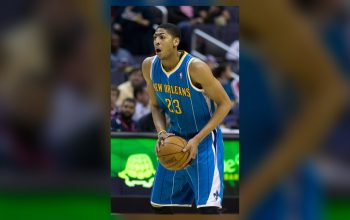
The NBA Draft is again putting a spotlight on big men, with teams weighing how size, defensive presence and long-term frontcourt fit could influence several first-round decisions. According to reporting from Journal-News.com, draft coverage has centered on the value of interior players in a league that still prizes shot blocking, rebounding and reliable paint scoring. That matters because teams picking near the top are not only shopping for talent, but also for roster balance and a player who can stay on the floor in different postseason matchups.
Big men remain a priority in a changing NBA
The league has evolved into a perimeter-driven game, but front offices have not abandoned the search for impactful bigs. If anything, the modern NBA has made certain skills more valuable: a center or power forward who can protect the rim, switch onto multiple actions, finish efficiently around the basket and survive defensively in space can alter the geometry of a team.
That is why the draft conversation around big men keeps resurfacing. Even when franchises build around guards and wings, they still need an anchor inside. In the postseason especially, teams are often exposed if they lack a defender who can challenge shots at the rim or a rebounder who can end possessions. Draft analysts and team evaluators know that finding those traits on a rookie-scale contract can be a major organizational advantage.
Frontcourt fit is driving first-round evaluation
Reports around the draft cycle have emphasized that the evaluation of big men is not just about height or wingspan. Teams are asking a more detailed set of questions: Can the player move his feet on the perimeter? Does he make smart reads from the elbows or short roll? Can he survive when opponents force him into repeated pick-and-roll actions? The answers often determine whether a prospect is viewed as a starter, a rotation piece or a developmental project.
That context explains why one big man may be considered a cleaner fit for a team with a stable veteran core, while another could be better suited to a rebuilding club willing to invest time. A team drafting for immediate impact may prefer a player whose defensive baseline is already established. A team with patience might target a young center whose offensive game is more raw but whose tools suggest upside. The draft boards can differ sharply depending on which of those paths a franchise is following.
Why size still matters in playoff roster construction
One reason teams keep circling back to frontcourt prospects is the constant need to survive playoff basketball. In the regular season, teams can often cover weak points with pace, shot volume and rotation flexibility. In the playoffs, those weaknesses are magnified. Opponents test whether a big can defend in space, whether he can keep rebounds alive and whether he can avoid foul trouble while still impacting possessions.
That is especially important in a conference where top teams often have multiple creators who can attack the rim. A front office drafting a big man is not simply adding height; it is trying to solve problems that appear in the highest-pressure games. A center who can block or alter shots without requiring heavy usage on offense can be extremely valuable. So can a big who gives a team lineups with more size without sacrificing too much mobility.
Draft value depends on development timeline
The next layer of the discussion is timeline. Big men often require more time than wings or guards before they become dependable NBA contributors. That does not make them less valuable, but it changes how teams project them. Some prospects arrive with one elite NBA skill and several rough edges. Others are polished but have narrower ceilings. The draft challenge is matching the player to the organization’s developmental structure.
Teams with established coaching staffs and stable G League pipelines can be more comfortable betting on growth. Teams searching for immediate production may be less willing to wait through the learning curve that frequently comes with young frontcourt players. That tension is part of what makes draft night unpredictable. A player who looks like a mid-lottery talent on one board could slide on another if the fit, role or defensive concerns are not ideal.
What the Journal-News report adds to the draft conversation
The Journal-News.com coverage included in Google News highlights how draft discussion around big men is being framed through team needs rather than simply prospect rankings. That is important because the league’s current roster-building environment has made fit a central issue. Teams want size, but they want the right kind of size. They want defenders who can cover mistakes, finishers who do not need a high number of touches, and players who can complement ball-dominant stars.
It is also a reminder that the big-man market in the draft can be more fluid than it appears. Some teams enter the process looking for a center and end up prioritizing a wing because of how the board falls. Others may move up or down based on which frontcourt prospects they believe can help them most quickly. In a draft class where positional labels can blur, the teams that identify the most transferable skills are often the ones that come away best prepared for the next season.
What to watch as draft night approaches
As the draft gets closer, the key questions around the big men will remain the same: Who can anchor a defense? Who can hold up in switching schemes? Who can rebound consistently? And which players have enough offensive utility to stay on the floor when games tighten?
For NBA teams, those questions are not abstract. They go directly to how a roster is built, how lineups are used and whether a young player can become part of the solution in meaningful minutes. That is why the attention on big men is not just a passing storyline. It reflects the league’s ongoing search for frontcourt players who can bridge the gap between traditional size and modern versatility.
With the draft approaching, teams will continue sorting through those tradeoffs. The names and board order may change, but the underlying need remains steady: front offices still want big men who can defend, fit and grow.
Sources
- Journal-News.com via Google News: NBA Draft Big Men Basketball
- Journal-News.com via Google News: NBA Draft Big Men Basketball
- Journal-News.com via Google News: NBA Draft Big Men Basketball