
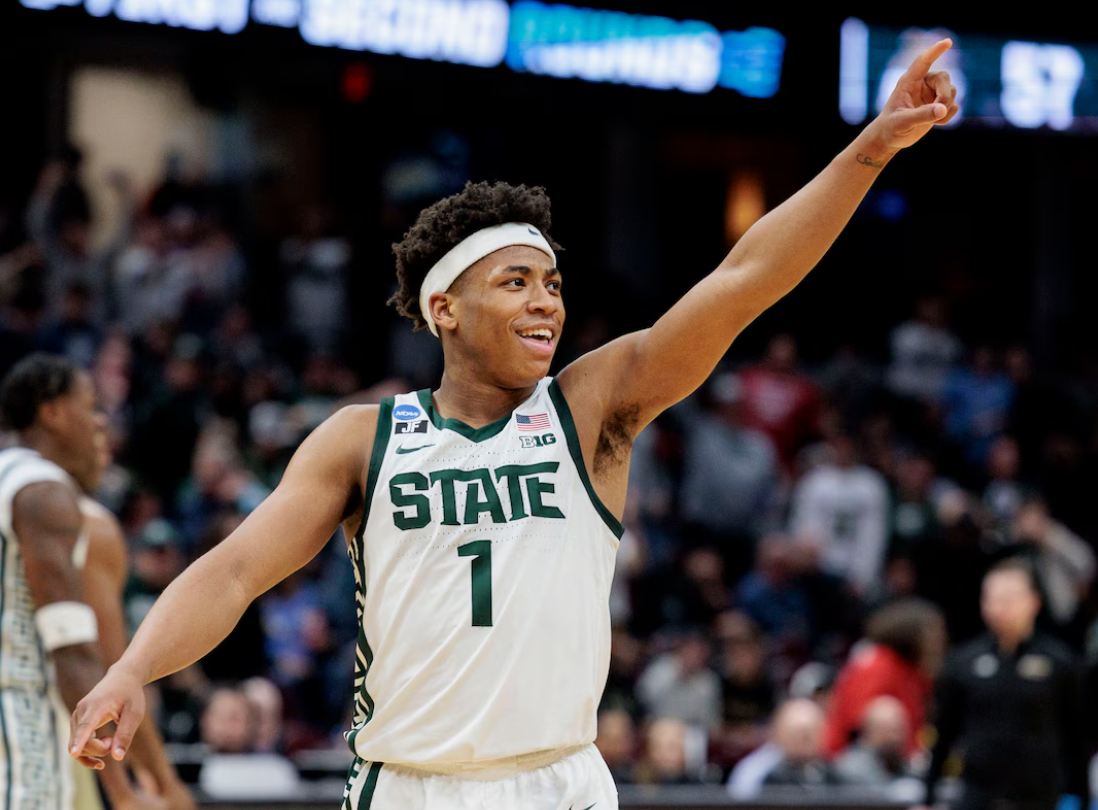
The lights shine bright at the Breslin Center on February 17, 2026. The UCLA Bruins roll into face the Michigan State Spartans in a prime-time Big Ten showdown. If you love college basketball that feels like a chess match instead of a track meet, this game delivers. Two solid teams meet with strong defenses, slow paces, and a home crowd ready to roar. I break down every key piece here so you see exactly why the total points stay under 139.5 in this matchup.
Game Overview
Michigan State enters with a 20-5 record and sits ranked 15th in the country. UCLA arrives at 17-8. Tip-off hits at 8:30 PM ET on Peacock. The Spartans play at home, where they win most nights and force opponents into tough shots. Both squads chase better conference standing and stronger NCAA tournament positioning. Expect a physical battle from the opening tip. No one runs up and down the court in a hurry. Instead, you watch half-court sets, smart passes, and big bodies fighting for every rebound.
Team Statistics Breakdown
Michigan State averages 78.8 points per game while UCLA puts up 77.9. Those numbers look close on paper, but the advanced numbers tell a different story. Michigan State ranks 13th overall in KenPom with an adjusted offensive rating of 120.3 and an elite adjusted defensive rating of 92.4. UCLA sits 42nd with an adjusted offensive rating of 119.7 and a defensive rating of 101.2.
The rebounding gap stands out even more. The Spartans pull down 44.1 rebounds per game, one of the best marks nationally. UCLA struggles on the glass in comparison. Michigan State also controls the defensive boards at a high level, which cuts off second-chance opportunities for the Bruins.
Turnover rates stay low for both sides, and effective field-goal percentages favor disciplined play. When you combine these stats, possessions drop and scoring chances shrink.
Recent Performance Trends
Michigan State dropped three of its last four games, including a tough road loss. The Spartans feel motivated to bounce back in front of their fans. UCLA lost 56-86 at Michigan in its most recent outing but showed fight in wins against Washington and others.
Both teams enter this game after road challenges. Michigan State plays better at home after setbacks. UCLA travels across the country, which adds fatigue. Recent games for both squads show they score fewer points when facing top defenses that slow the action.
Key Player Matchups
Michigan State leans on Jeremy Fears Jr., who scores 15.1 points and dishes 9.2 assists per game. Jaxon Kohler grabs 9.3 rebounds and plays efficient basketball at 50.6 percent from the field. Coen Carr adds 11.7 points and strong energy inside. Cam Ward returns healthy and helps the backcourt.
UCLA counts on Tyler Bilodeau for 17.9 points on solid efficiency. Donovan Dent runs the offense with 13.5 points and 7.0 assists. Eric Dailey Jr. works the inside for 11.0 points and 5.6 rebounds. Skyy Clark returns from a hamstring issue but plays limited minutes. Xavier Booker, a former Spartan, faces his old team and brings extra effort.
These players battle in a slow setting. Michigan State’s perimeter defenders and big men inside limit easy looks. UCLA must work hard for every bucket, which keeps the score from climbing fast.
Coaching and Home Court Factors
Tom Izzo knows how to prepare his teams for big home games. He makes smart adjustments during timeouts and gets the most from his players when the Breslin Center crowd gets loud. Mick Cronin builds tough, defensive-minded squads at UCLA, but road games against ranked Big Ten teams test every coach.
Home court gives Michigan State a real edge. The energy lifts the Spartans and makes it harder for visitors to find rhythm. Travel distance for UCLA adds another layer. The Bruins fly from the West Coast, which can slow their legs in the second half.
Tempo and Three-Point Shooting
Both teams play slow. Michigan State ranks around 265th in adjusted tempo while UCLA sits near 310th. Fewer possessions mean fewer chances to score. The Spartans defend the three-point line well and force opponents into lower-percentage shots. UCLA attempts threes at a decent rate but faces a Michigan State defense that ranks seventh nationally in adjusted efficiency. Hot three-point shooting rarely lasts long in this type of matchup.
Why I’m Confident in the Under 139.5 Total Points Prediction
The numbers line up perfectly for a game that stays under the total. Five respected prediction models all project final scores well below or right at 139.5 points, and the on-court factors support them.
- Bart Torvik gives Michigan State a 72-64 win for a total of 136 points.
- KenPom ratings and home adjustment point to something close to 73-65 for a total of 138 points.
- Sagarin Ratings see a tight contest around 71-66 for 137 points.
- Haslametrics projects 74-64 for a total of 138 points.
- A second look at Torvik systems lines up again at 72-64.
These models use efficiency ratings, pace data, rebounding margins, and strength of schedule. They all agree the slow tempo and Michigan State’s elite defense keep scoring in check. The Spartans limit opponents to 36 percent shooting overall this season. Their rebounding edge stops UCLA from grabbing extra possessions.
The line sits at 139.5 because some expect average outputs, but the style of play says otherwise. Both teams rank near the bottom in pace. Michigan State’s top-10 defensive rebounding prevents second chances. UCLA relies on efficient shots but struggles to create them against a crowd and a veteran coach who adjusts quickly. Recent blowout losses were outliers against faster or mismatched teams. This game features two similar slow styles, which leads to fewer total points.
Add in conference implications. Both sides play careful basketball because every possession matters for seeding. Motivation stays high, but that leads to smart, not reckless, play. The data from these five models, plus the matchup details, builds strong confidence that the final score lands comfortably under 139.5.
Strength of Schedule and Historical Trends
Both programs faced tough Big Ten opponents all season. Michigan State and UCLA know how to grind out wins without big numbers. Past meetings between these teams often stay close and low-scoring, especially on the road for UCLA. The Spartans protect home court and keep games in the 130s or lower.
Situational Elements That Matter
Michigan State gets a home reset after recent losses. The crowd helps them play with extra focus. UCLA deals with cross-country travel and plays the second game of a tough road stretch. No major new injuries change the picture much. Depth holds for the Spartans, and UCLA’s key pieces stay available but not at peak freshness. These elements favor control over chaos.
What to Expect on Game Night
Tune in and watch the defensive intensity from the start. Michigan State sets the tone with tough rebounding and smart half-court offense. UCLA fights back with efficient looks from Bilodeau and strong interior play. The score moves slowly as both teams trade stops and careful baskets. Expect plenty of timeouts for adjustments and a second half that stays physical.
This game gives fans exactly what makes college basketball special: two well-coached teams battling for every inch on the court. The Spartans should edge it out, but the real story sits in the low total. The numbers, the pace, the rebounding, and the five major models all point the same direction.
When the final buzzer sounds, you will see a hard-fought Big Ten win with a score that stays under 139.5. Grab your snacks, settle in, and enjoy a night of smart, gritty basketball. This matchup delivers the kind of game that reminds everyone why we follow the sport. The total points stay low, just as the data predicts, and the winner earns every point the old-fashioned way.
My pick: under 139.5 total scores LOSE